Press Release · Airlock Digital
Airlock Digital Launches Agentic Control, Policy-Based Control Over What AI Agents Can Execute
Distributed by ScoopByte · Originally issued via PR Newswire
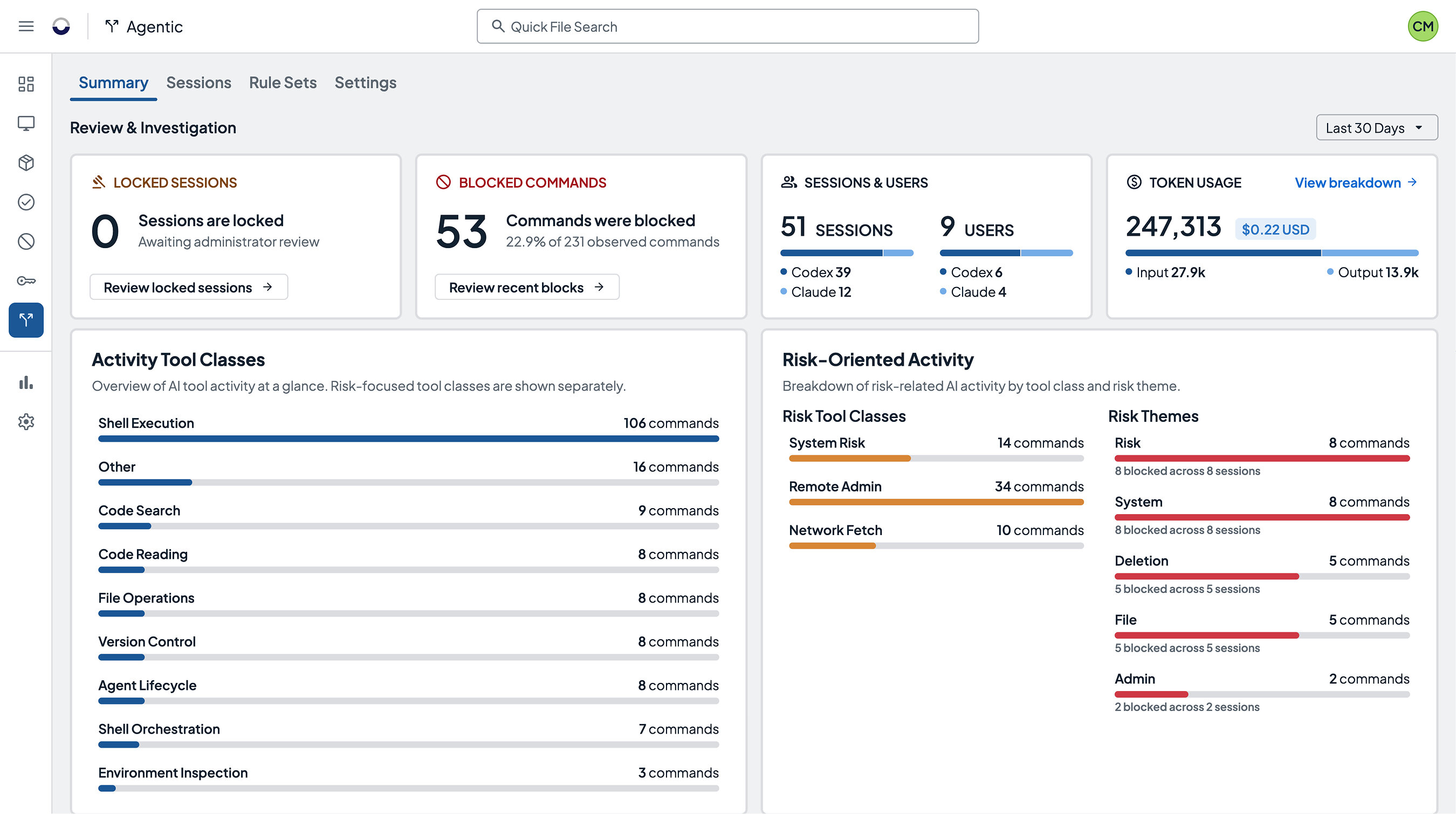
With the release of Agentic Control, teams see what supported AI agents attempt, apply policy before execution, and return the decision directly to the agent.
ATLANTA, Nov. 17, 2026 — Airlock Digital, the leader in preventative endpoint security, today announced the availability of Agentic Control with the release of Airlock Digital v7.1. Agentic Control includes dedicated Agentic Steering capabilities for AI agents, allowing customers to extend their Deny by Default Application Control to this emerging technology. Airlock Digital evaluates an agent's requested behavior at runtime to stop unauthorized agent behavior before it attempts to execute it.
Application Control has traditionally focused on what employees can run on their endpoints. Now AI agents work on those same endpoints, usually with the same access as the employee: the same applications, identities and files. Unlike employees, agents run commands, access files, and adapt on their own as they work toward a goal. That leaves security teams with a new question: what should AI agents be allowed to execute?
Agentic Control is built to address this uncertainty. Before an agent's action executes, Airlock Digital evaluates it against the customer's policy and stops what isn't permitted. It then returns the decision directly to the agent, with administrator-provided context or an alternative where configured, so the agent can adapt and keep working within policy. Simply blocking the agent's attempted action can escalate risky behavior and introduce greater risk. Agentic Steering, a capability within Agentic Control, gets the agent to the right outcome on the first retry.
In April 2026, the Cloud Security Alliance reported that 82% of organizations had unknown AI agents running in their environments, and 65% had experienced an AI agent-related security incident in the prior 12 months. Together, with the AI discovery introduced in Airlock Digital 7.0, Agentic Control gives security and IT teams five capabilities:
- See every AI tool. Discover AI agents, LLMs, and harnesses across the entire endpoint estate.
- Define trust boundaries. Block unapproved AI applications and agents, ensuring employees only use corporate-approved applications. Deny By Default allows policy maintenance to scale without having to keep track of the millions of available versions of agents, LLMs, and harnesses.
- Control every action. Evaluate agent-initiated endpoint actions in popular agent platforms like Codex and Claude. Every action is evaluated against customer-defined policy before execution. Permitted actions proceed. Prohibited actions are stopped.
- Steer, don't just block. When an action is denied, Airlock Digital returns the policy decision directly to the supported agent. Administrators can add context explaining the decision or suggest an alternative. The agent can adapt, keep working within policy, and learn policy boundaries to improve future executions.
- Continuously improve policy: Airlock Digital also centrally records agent sessions, commands, files, policy decisions, outcomes, risk activity, token usage, and estimated cost. Teams can search sessions, review AI-generated session summaries, and show executives, auditors, and regulators how agentic AI is being controlled. Most importantly, teams can continue to refine Application Control policy over time.
"Traditional application control determines what software is trusted to execute. Agentic AI introduces a new actor on the endpoint, with an ability to execute other applications. Teams now need the ability to define and enforce what an AI agent is allowed to do once it's running," said David Cottingham, Co-founder and Chief Product Officer, Airlock Digital. "AI agents don't simply stop when an action is blocked; they evaluate alternatives and continue working toward their objective, no matter how risky that approach may be. Rather than leaving an agent to take increasingly risky measures to complete its objective, organizations can communicate clear operational boundaries, allowing trusted agents to adapt their behavior while remaining within policy."
Agentic Control adds a preventative check at the endpoint, where agent actions take effect. It complements AI platform controls, identity and access management, data security, and detection and response. Airlock Digital decides whether each resulting action is allowed to run under the customer's policy.
"What we're hearing from customers is that AI agent adoption is outpacing the security programs meant to govern it," said Kevin Dunne, Chief Executive Officer, Airlock Digital. "Organizations need to understand what trusted AI agents are doing, define what they're allowed to do, and ensure they operate within organizational policy. Agentic Steering fills the market gap by giving organizations the visibility and control they need to confidently adopt AI without slowing the business down."
Availability
Agentic Control with Agentic Steering is available to Airlock Digital customers with v7.1 for Codex and Claude. It was previewed at Black Hat USA 2026 as Agentic AI Control & Governance. To learn more, visit airlockdigital.com/agentic-ai-usage-control.
Media contact
Kaitlin Shinkle
CMO
Airlock Digital
[email protected]
SOURCE Airlock Digital
About Airlock Digital
Airlock Digital is the preventative endpoint security company. Built by practitioners, its enterprise-grade application control and deny by default product helps organizations in finance, healthcare, manufacturing, critical infrastructure and government stop attackers before they can act, without disrupting the business. Founded in Australia and supporting customers worldwide, Airlock Digital is certified to ISO 27001 and holds SOC and IRAP credentials.